


There’s been a theme, I think, this week about self-belief, and so I’m rounding it off with some thoughts similarly thrown in that direction, and I’ll get there through a story from my youth.
It’ll be obvious I have altered a name slightly in this story, but I’m hoping what I have chosen signals the character perfectly.
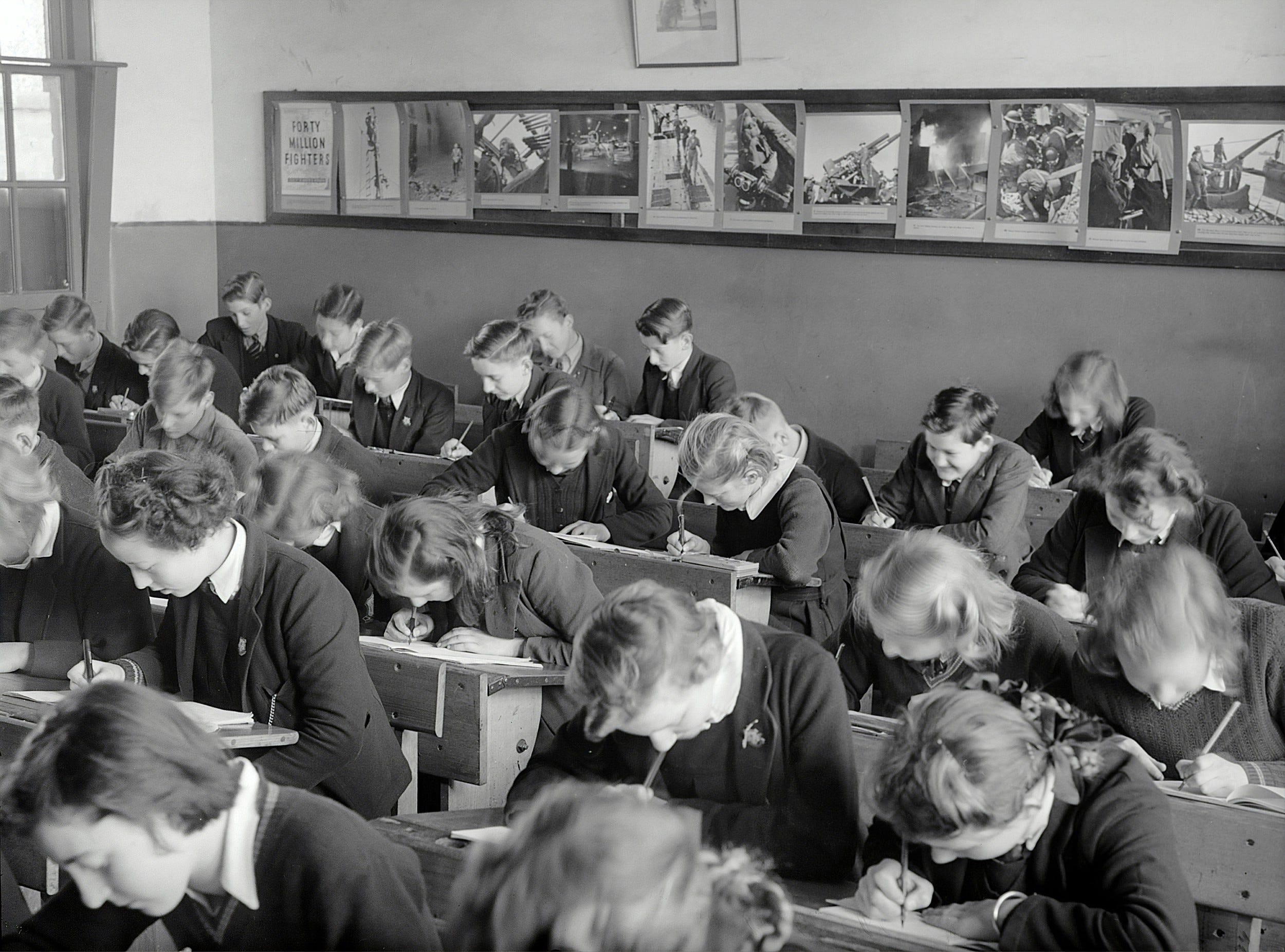
Pic: Museums Victoria
When I made the leap from small-town primary school to county-town secondary school, or high school, I suppose, in other languages, it was somewhat of a shock to the system.
My Mum and Dad seemed keen for me to attend the all-boys school in the town. A newly appointed comprehensive education school, it had only just made its own giant leap from being an established grammar school, with a history dating back to 1617.
409 years. William Shakespeare was still alive, James I was on the throne, the first monarch to rule both England and Scotland, the black death was still haunting cities and in educational terms, education was largely limited to boys, often tied to the church.
The school had a proud history of academic and sporting achievements. Historical figures had attended like Alfred Russel Wallace attended, he was the naturalist and evolutionary thinker parallel to Charles Darwin, our house was named after him, house in school that is. Bishops, authors, sportsmen, and later Rupert Grint, who played Ron Weasley in Harry Potter.
There was a sense of pride in our house that I’d made the cut and could attend this school built from bricks nearly as old as Hogwarts, well not quite, but give me some poetic licence.
But as I joined, we were in transition from grammar to comprehensive modern, a private school if you will in many ways if you want to think of it that way, to one run by the state and some of the teachers, or masters as they liked to be known, thought this to be a dumbing down period, and weren’t keen at all!
My year was a year of students that, in some of those masters’ eyes and thoughts, had magicked their way into a scenario that they weren’t worthy of, and one caped teacher still from 1617 I think took the opportunity to prove his point by getting us all to sit what was called the eleven plus exam.
The eleven-plus was an exam taken by children in England and Wales at age 10 or 11, usually in their final year of primary school.
Its job was simple and brutal: decide what kind of secondary education you were going to get.
If you passed, you went to a grammar school, which was academically focused and seen as the route to university and very fine professional careers. If you didn’t, you went to a secondary modern school, which tended to be more practical and, in reality, came with fewer qualifications and opportunities. That’s not strictly true of course, but this is the way in which it was viewed.
The exam itself tested things like English, maths, logic, and verbal reasoning. Not what you knew, so much as how quickly and neatly your brain could jump through hoops on the day. This wasn’t a paper you were allowed to take again, but the results held a decision that could shape the rest of your life.
You’d take the exam, a letter would arrive, which would tell you very early on in your life what sort of person the system thought you were going to be.
I would imagine you have now in your mind visualised what kind of person would pass an eleven plus, so I’m going to read some names and you can tell me, in the secrecy of space only you and I are sharing, whether they passed or not. Just say yes or no.
Stephen Hawking.
David Attenborough.
Ricky Gervais.
Brian Cox.
David Beckham.
Richard Dawkins.
And Paul Gascoigne.
I appreciate some names you won’t be familiar with across the globe, but I would hazard a guess that Brits have picked out three names that fell at that hurdle.
But no, you’d be wrong, every one of those names passed this exam paper that purported to separate the wheat from the chaff in the education system.
And so it came to pass that my classmates and I, on our first day in a Victorian glazed brick classroom, were getting a dressing down from the house tutor Mr Crotchley-Hardwhip, determined to prove some kind of point that many of us shouldn’t even be gracing his wooden chairs with our uneducated backsides.
He was a chippy man, who only seemed to have one volume, a rather aggressive tone and carried the look of resentment with consummate ease.
I don’t recall exactly what he said, of course, but having been there for two decades, he loathed the very principle of having to say he was a state school teacher, I imagine, in the pub each night.
He walked around the hushed classroom of nervous sprogs as we were indelicately referred to, passing out A4 sheets, with the words eleven and plus on the front.
In its classic form, you were usually looking at two to four papers, each lasting about 45 to 60 minutes. So in real terms, a child might spend two to three hours in total sitting tests, with short breaks in between.
Crotchley-Hardwhip had made a compilation of no doubt the more challenging questions, and this was what he was presenting.
“Boys, you have 30 minutes. Go.”
I turned mine over and started trying to answer maths, reasoning and English questions, casting my eye across the class to see if any of the other lads were scanning the air for some kind of divine intervention too.
It was clear what Hardwhip was doing. It was an army tactic, break ‘em bad, and then build ‘em back up again.
In the playground, during the next break, I looked for friends who had made the move to this school with me, but had been placed in other houses.
“How did you do?” I asked one of my friends, “Do you think you passed?”
“Passed what?” my friend Jon said to me.
“The eleven plus?”
“What?” He said.
“We didn’t do that, we took a walk around the school and went to the music block, where we all got a chance to play drums.”
(Pause)
The following day, Crotchley-Hardwhip, during morning assembly, stood up holding his lapels and with a self-satisfied, smug grin, announced we were all failures, which, considering some of that class went on to study at some of the most prestigious universities, can not possibly have been true.
But he didn’t choose to say this in a collective way, he called all of our names individually, following the announcement of our surname with FAIL.
There was a spattering from memory of indignation mixed with self-satisfied pleasure as he picked names out, and occasionally, when he got to a particular name where, I don’t know, intel suggested they were actually an academic in waiting, he added the sound of surprise to the word FAIL.
Some of this, as the years have passed, I warn you I may have embellished slightly, but I do remember those two days, the test and the results.
I also remember him reading the names, being chastised for something I did NOT do.
I wasn’t the one who mockingly said FAIL, not so far under his breath that Crotchley-Hardwhip didn’t hear.
“What was that boy?” he spluttered, piercing my brain with a look that pretty much crumpled me in front of my classmates.
“Nothing sir, I didn’t say anything.”
“It’s always the same boy, you have nothing to say and nothing to offer this class with your mark. You stupid boy.”
It wasn’t the start I’d hoped for, and was definitely the commencement of a mutual loathing we had for each other for the next two years, and try as I might for it not to do so, it certainly knocked my confidence.
And then he left. He simply wasn’t there in September when my third year commenced. Usually there is an announcement that so and so would be leaving, but not Crotchley-Hardwhip, he simply buggered off, as the quaint expression goes.
It’s hard to pinpoint when confidence is knocked and how much effect something probably deemed trivial by some and no doubt funny by Hardwhip, actually has on a life.
But at that moment the wicked witch is dead to borrow a line from Oz.
Actually, Oz, is a pertinent way to end the story.
In The Wizard of Oz, the Scarecrow spends his entire journey convinced he lacks a brain. He defers, apologises, stands back. And yet, time and again, he’s the one solving problems, spotting danger, working things out. The wizard eventually hands him a certificate and calls it intelligence. It needed someone to notice.
And that, I think, has been the point of at least three of our features this week. Belief often lags behind evidence. We decide early on what we are, or what we’re not, usually because someone older, louder, or wearing a gown tells us so. The trouble is, like the Scarecrow, we can go a long way doing the thinking without ever quite trusting that it’s ours.
That’s a sad story of unnecessary domination; on the other hand, his “buggering off” might have been a sacking – hurrah! It’s 'chaff' and 'principle', by the way: a couple of typos.