


There is an irony in the fact that the episode before this invited you to share the podcast, so it doesn’t become a best-kept secret. You may have to park that with a wry smile today.
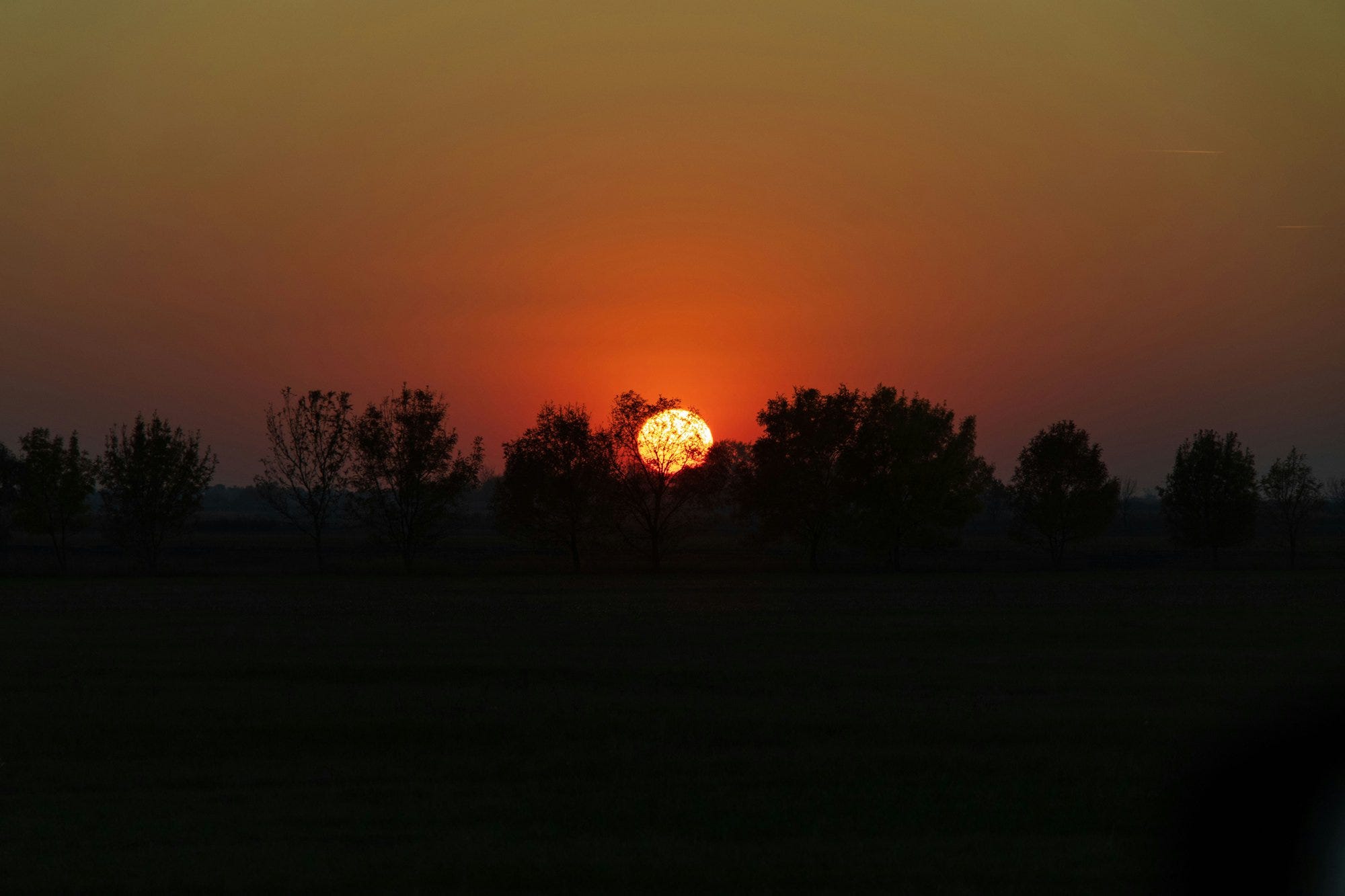
Pic: Ilona Veres
“What you need to learn, Neale,” said a former colleague, “Is when to say no, or stop.”
I always thought those words of advice offered up by someone who navigated show business in a way I never could were misplaced, despite the fact he became a household name and just as known for walking away at times you thought he shouldn’t. It was strange advice, I felt.
Whenever I shoot a wedding, during the preparatory chat we have leading up to the big day, I always close our conversation with these words.
“At the end of the night,” I say, “I won’t necessarily announce my departure, I’ll just fade away into the evening at the appropriate moment, (I don’t like a fuss) and the next time you hear from me, it’ll be when I have all your photographs ready to share.”
I often add something along the lines of, “You’ll be dancing and chatting with friends anyway, and the last thing you need is some kind of Shakespearean Hamlet tragedy where the photographer announces his departure stage left.”
I’ll make sure to recount that with all the gravitas of the late Sir Laurence Olivier playing Hamlet on screen and stage.
I’ve been saying it for many years and it usually raises at least a chuckle, and just once, it fell on the ears of someone who knew the part was famously played by Sir Larry, which had context, seeing that it was a wedding to be hosted at a place called Notley Abbey, which was a wonderful home to both Laurence Olivier and Vivien Leigh in the day.
But you don’t, do you? I mean, you really don’t need a big announcement. A month back, I watched as the videographer gathered the bride, groom, and a few bridesmaids and, I kid you not, organised a group hug upon his exit. The sort of huddle you might see in the World Cup as the two finalists prepare to decide the winner in a penalty shoot-out.
It’s the same sort of thing on YouTube, these “I quit, I’m never using film again, sold all my cameras, going off grid now, this is the last time you’ll hear from me” style of titles designed to make you shout; “Doris, Nigel Thumbnail says he’s quitting YouTube for good, and this time he really means it, close the curtains, lockdown the house and pull out the supplies being saved for Armageddon.”
I’ve used many a clickbaity title myself, so I appreciate I may need to pull out a make up mirror there.
Having said all that about big goodbyes, this is actually a piece about this little podcast and the fact that my lovely experiment is ending today, at least for the time being. In truth, it’s simply heading back to where it came from. These reflections, renamed now Halfway to Maybes, will return to The Extra Mile, part of The Photowalk podcast, my weekly walks with a camera, where they’ll become a regular feature of my Friday musings.
I’m not doing a big Nigel Thumbnail goodbye, though. Please accept this as a thank you, and for many listeners, see you (speak to you) within the Extra Mile once again.
I like Halfway to Maybe, both as a title and as a writing project, and it’s the latter I’ve especially enjoyed, although there’s a piece of advice that I was reminded of this morning by my good friend Lynn, that has haunted writers for well over a century: “Kill your darlings.”
I looked it up, fact-checked it, as is the trend now. It’s usually credited to the American novelist William Faulkner, though literary historians point further back to the English writer and critic Arthur Quiller-Couch. He was teaching aspiring authors at Cambridge when he suggested that whenever they wrote something they thought was especially brilliant, they should have the courage to cut it. His point wasn’t that good writing should be destroyed. It was that affection can cloud judgement. We fall in love with our own creations, and sometimes that’s precisely when we stop seeing them clearly.
I’m not claiming brilliance by the way, just quoting what was said.
Over the years, the phrase evolved into “kill your darlings.”
Creative people are encouraged to persevere. Keep going. Don’t give up. Push through. It’s good advice most of the time, but not all the time. Occasionally, the hardest decision isn’t carrying on, it’s recognising that an experiment has reached its conclusion.
That’s where Halfway to Maybe finds itself.
This little project was never intended to become a giant production. It was an idea that wandered into my head and deserved the courtesy of being tested. Perhaps there was an audience for short reflections that sat somewhere between conversation and diary. Perhaps people would build them into their routines. Perhaps they would find a place in the day that longer podcasts sometimes struggle to occupy.
And perhaps they wouldn’t.
The interesting thing about experiments is that they succeed when they produce an answer. We tend to judge them only by whether the answer was the one we wanted, but that’s missing the point, isn’t it?
Halfway to Maybe has told me what it needed to tell me.
The audience never quite gathered in the way I’d hoped, and that’s perfectly all right. There are countless ideas that deserve a chance, but not necessarily a lifetime. Continuing simply because something exists isn’t always resilience. Sometimes it’s just sentimentality.
I didn’t, by the way, write it just for an audience; I did it for me, but the frequency is somewhat challenging at a time when my real darling of podcasts, The Photowalk, is saying, “Don’t forget me over here, please, we’ve got many walks to make yet.”
So this is the end of the Halfway project, here at least. At lunchtime today, I’m going to metaphorically take it down to the railway station of ideas, complete with a hand-wrapped package containing marmalade sandwiches, of course, and wave it off to Paddington, which is on my line as it goes.
I don’t see it as a failure. If anything, it’s evidence that making things is still worthwhile. Every attempt teaches you something. Every false start clears the path for a better one. Every abandoned sketch leaves a pencil a little shorter and the artist a little wiser.
Somebody famous, I can’t think of now, said that, maybe even Picasso.
The thoughts that appeared here won’t disappear. Some will undoubtedly resurface elsewhere, folded into another podcast, another article or another conversation. Creative work has a habit of recycling itself in unexpected ways.
I’ll be writing fresh Halfways, just for an audience on a different channel, where it started a year or so ago.
So no big announcement, although I do want to remind Doris to whip open the curtains, let the light flood in, and put twenty-year-old blown tins of tuna and baked beans back in the Armageddon cupboard. I’ll talk to you on the Extra Mile podcast next week. Right now, I need to go and walk the dog.
Hmmm, there’s a good idea for a podcast, I like that idea… perhaps there’s a chance to… (fades off into a door close gag on the podcast version.)