


Seeing never quite switching off is probably an apt way to start today’s edition, because that’s the theme of this short piece today.
My mate from the FujiCast podcast, Kev Mullins, and I were talking about social media of late and what he does and doesn’t like in terms of SM consumption, in terms of kids, this is, and TikTok was top of his ‘against the wall come the revolution’ list.
Pic: Shaun Day
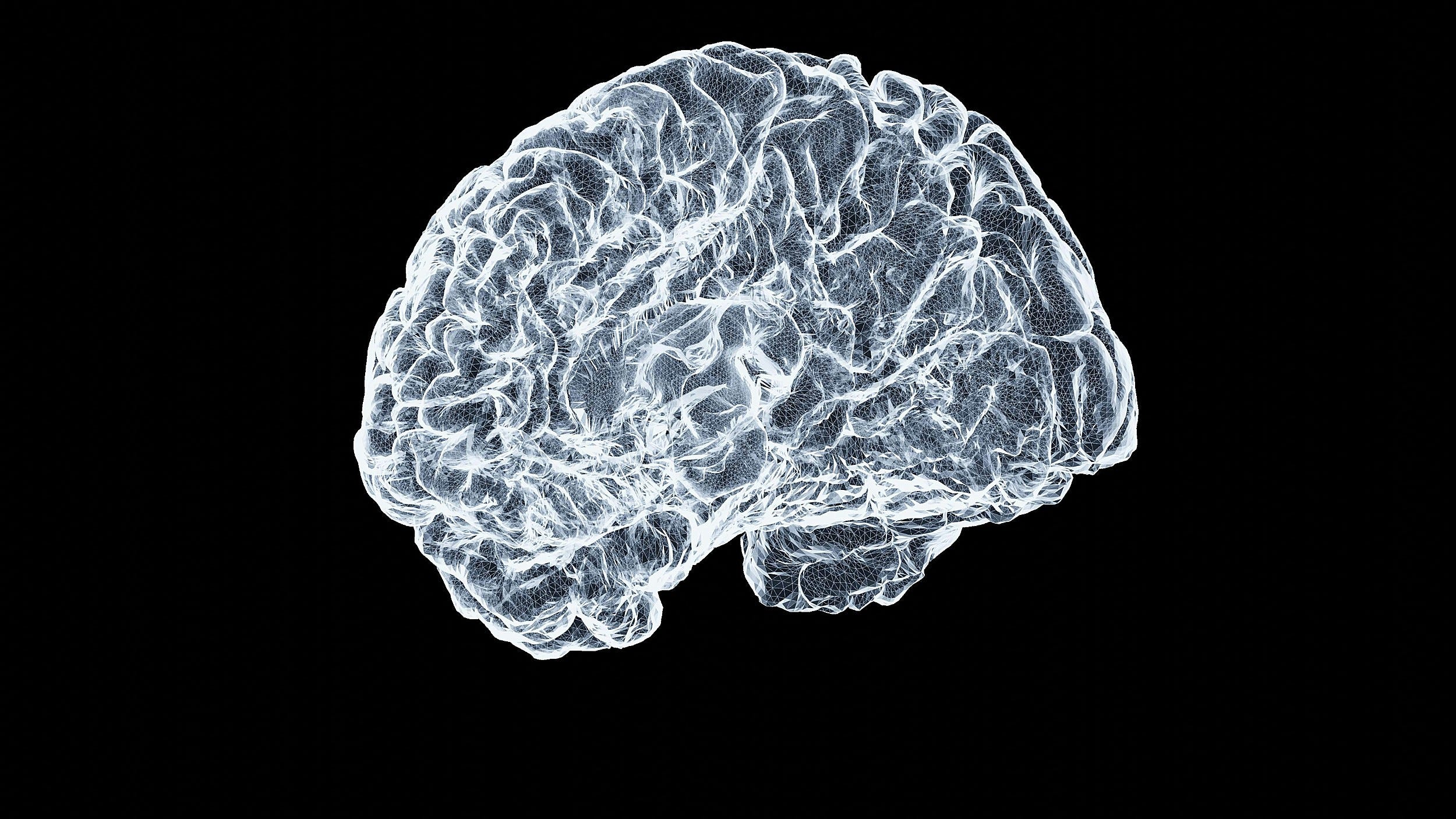
“I can literally see their brains coming out of their ears,” he complained, as if this is something that afflicts only the young, but he knows, I know that this is a common thread now, which, but less than a generation ago, did not even exist. I don’t want to get all ‘drama darling’ about it, but could this be the pandemic nobody really thinks of as such?
I drilled down into the doom-scrolling habit and revealed:
Teenagers often scroll late at night. Content leans toward comparison. Looks, bodies, popularity, success. Confidence can be a casualty as can sleep.
Young adults (20s). Scroll between tasks. Feeds mix news, careers, lifestyles. Pressure to be “doing better” creeps in, with a side serving of anxiety, which is hard to switch off of course.
Adults (30s–40s). Scrolling, they say, feels a touch practical, but no less addictive. News, parenting, money, work. Bad headlines stack up fast in these scrolls, and stress is normalised.
Midlife (50s–60s). You see, us lot have reframed this as ‘staying informed’. Our eldest, Jack, is the first to scoff at me for this excuse. Politics, health stories, world events. Boy can I go off on one about what’s in the news and who’s done what to who.
Older adults (70+). Facebook dominates. Local news and community groups. This is the group most likely to believe and spread false information travels fast. The doom scrollers in this category have, in some departments, shaky trust.
The common thread, different ages, same-ish pull. The brain reacts to threat and novelty.
Scrolling oddly gives you the feeling you’re in charge, which I recoiled at when reading, but you know what, it’s bloody true.
Monday night, the man who keeps me from climbing walls and repeating Shakespeare sonnets backwards, Neil Ford, an IT superhero in plain clothing came across to just go through stuff, and let me level with you here, check that I haven’t been changing settings on the sly.
He knows, you know, I swear in the same way a shark can smell one part of blood in a million parts of water, he can smell that I have unclicked something on a dropdown I shouldn’t have. I know sharks don’t technically smell blood, but let me have that one, will ya?
Anyway, he came bearing a gift. A book about bullet journaling, with one of the dotted notepads that you use to do said bullet journaling.
He didn’t say it as much, or perhaps he did, but he was certainly loudly intimating that using your phone or any electronically connected thing can often distract you from the task at hand. I mean, if you grab your phone to make a note, what’s to stop you from thinking, “I wonder what comments I may have had on Insta,” or “I wonder if there are any dogs being reunited on YT while I’m here.”
Perhaps he was suggesting too, that my reliance to do everything on a phone or laptop, i.e. lists and journalling of life too, is not always the cleanest way to be productive because of the distractions possibilities. I mean I came here to make a note, remember life, who said what to who, and make plans, Nigel.
“Nigel?”
“Who is this Nigel?”
It’s a song, a little easter egg thrown into the script to tempt you to look for it on YouTube without clicking on to anything else in the meantime.
My synapses or whatever are firing aren’t they, look at those connections go!
I did think at first, “Well that might work for you, but for me, it’s just another thing I need to think of in terms of making notes in… you’ve just handed me, albeit pen and paper lead, another attention sponge.”
But then I did a little reading, over the last day or so and have come up with some thoughts on how our screens have rewired our brains. And moreover whether we can do anything about it.
My main weakness in terms of social media is YouTube.
I seem incapable of a simple search about a leaky drainpipe. Before I even type a single word into the search bar, a thumbnail catches my eye, a conspiracy theory (I’m not even a theorist), politics, yes bloomin’ politics, whether my team might win the league, aircraft landing on carriers, look I’ll open it now, and I promise you I’ll not click on a film. Here’s the list that comes up, standby. These are the titles that show first.
How to get your kicks working in a DIY shop. It looks like comedy, I think it is, I’m not clicking on it.
The most intense day of my photography career. I’m alright, it’s too clickbaity, though I like the creator of it… the DIY shop is still the one I’d have gone for.
Then the shorts, there’s one about a climber panicking on a free climb, he’s the world’s best climber, so I think I may have clicked this only to find out how he succeeded in the end. The only five exercises you need to get jacked. Nuff said, I don’t feel I need to go there, because I certainly do not look like the guy in the thumbnail. But he just may have the secret right? There’s a dog being reunited with his owner after five years, this is getting harder you know… look have I made my point?
With YT, I click and really, twenty minutes evaporate. I close the app and wonder what I was looking for in the first place.
If this feels familiar, you’re not alone. And according to Ryder Carroll, the designer who created the Bullet Journal Method, this isn’t a personal failing; it’s by design.
Bullet point, because it seems appropriate. The Deliberate Architecture of Distraction.
Ryder Carroll, who spent years struggling with attention difficulties before developing his analogue productivity system, has become one of the most articulate voices on what our digital devices are doing to our capacity for focus. In his book The Bullet Journal Method, he describes our smartphones and apps as “weapons of mass distraction,” engineered with extraordinary precision to capture and monetise our attention.
The mechanics are simple but devastating. Every app on your phone has been optimised through thousands of tests (whoever they are), refined by behavioural psychologists, and tuned by machine learning algorithms with one goal: keep you engaged. Not informed. Not productive. Not happy. Just engaged.
Because engagement, measured in minutes and hours, translates directly into advertising revenue. No wotsit Sherlock.
YouTube’s autoplay feature, which queues up the next video before you’ve finished the current one, wasn’t created for your convenience. It was created because YouTube’s engineers discovered that removing the choice, what they call choice friction, that moment where you might decide to close the app, resulted in dramatically longer viewing sessions.
The algorithm learns what keeps you specifically watching, building an ever-more-accurate model of your likes and, let’s call it weaknesses. Dogs being reunited, chief one of mine.
But why does it work so effectively? The answer lies in how these platforms exploit our brain’s reward circuitry. Every time you pull down to refresh your social media feed, you’re engaging in what behavioral psychologists call a “variable reward schedule”—the same mechanism that makes slot machines so addictive.
You don’t know what you’ll find when you refresh. Maybe nothing. Maybe something mildly interesting. Maybe something that triggers a dopamine spike, a like on your post, a message from someone you care about, a piece of outrageous news. This unpredictability is crucial. If rewards were predictable, we’d lose interest.
Ryder Carroll noticed that we developed what he calls “rapid cognitive shifting”—the habit of jumping from stimulus to stimulus without ever going deep. There’s always something new, something now, something urgent-seeming but ultimately trivial. The infinite scroll means there’s no natural stopping point, no sense of completion. You can never reach the end of TikTok, Instagram, or Twitter, sorry, I refused to call it X.
To use my favourite TV detective Columbo, there’s always ‘one more post, one more video, one more thing to check. Bring me a bowl of chilli will ya?’
Traditional media had natural boundaries; the newspaper had a last page, a TV show had an ending, and you couldn’t binge-watch on day one, and a magazine could be finished. You could stop consuming, and actually it wasn’t even your choice.
“What do you mean I’ve got to wait to next week to find out what happened in Call the midwife?”
When we’re constantly interrupted, constantly pulled toward whatever flashing light demands our attention, we lose the capacity for self-reflection, Ryder’s words there. We become, in his words, “strangers to ourselves.”
If I were a dog now, like one of the ones in the dog reuniting shorts, I would be running around in circles chasing my tail in excitement, because even though I knew this stuff, I don’t think I ever really knew it, if that makes sense.
The Bullet Journal Method emerged from Ryder Carroll’s personal struggle with this fragmentation. As someone with ADHD, he found that digital tools, far from helping him organise his thoughts, made his attention problems worse. The constant notifications, the switching between apps, the infinite possibility of distraction, all of it created cognitive chaos.
So his solution was radically analogue: a paper notebook with a simple system for tracking tasks, events, and notes. Writing by hand is slower than typing. Turning pages is slower than swiping. This friction, the word now being used more positively at this stage became the real feature.
I often talk about photography slowing me down and creating space for thought, and here it is in a journaling form.
Of course, understanding this doesn’t make the pull go away. But it does change the nature of the struggle. It’s not my fault that I opened YouTube for one thing and got lost for twenty minutes. That outcome was engineered by some of the smartest designers and psychologists in the world, backed by billions of dollars in resources. The platform won because it was built to win.
The way forward, as Ryder Carroll suggests, isn’t to fight these systems with willpower alone, because like a donut that says ‘eat me,’ willpower is finite, and these systems are relentless. Instead, we need to build new systems, new habits, new environments that work with our brain’s tendencies rather than against them. Your brain didn’t evolve to resist infinite scrolling. But it did evolve to adapt, to learn, to change. The same neuroplasticity that allowed these apps to train you into distraction can train you back toward focus, one intentional choice at a time.
So I have just received this gift from Neil. It could be a gift of time, a gift of concentration, a gift of patience, a gift of… so many things, and I think I’m in. I’m fascinated, that’s for sure.
It’s food for thought while I make a cuppa, and please, even given I’ve just said, would you excuse me for five minutes? I do need to go and watch a film about, how to get your kicks working in a DIY shop. And then I promise to bullet journal my experience.
Some links to additional resources:
Planning & Journalling
Rachelle in Theory
YouTube Channel - https://www.youtube.com/@RachelleinTheory
Why “Interstitial Journaling” Might Save Your Sanity - https://blog.neilcford.uk/post/why-interstitial-journaling-might-save-your-sanity/
The Truth About Thinking on Paper - https://youtu.be/z-i7Gc96PaQ?si=VIXzxfTUt-ZD2N4X
Thinking Book Guide (PDF and 5 emails) - https://rachelleintheory.com/thinking-book-guide
Rapid Logging - https://youtu.be/YxZrbQMfKDA?si=yukrc4vvDYjsPFM_
Capture Methods - https://youtu.be/jI8Z1vAOj5A?si=kEUsaZXItOvIp1wU
Paper for thinking, digital for storage - https://youtu.be/ncTreHfHG04?si=YOdS8WJ5HTdcSEe4
Newsletter - https://rachelleintheory.com/newsletter
Sarah Hart-Unger
Best Laid Plans (book) - https://uk.bookshop.org/a/15347/9781464246333
Website - https://theshubox.com
How To Plan Better | Deep Questions (podcast) - https://www.thedeeplife.com/podcasts/episodes/ep-394-do-i-need-a-better-planning-system/
Fin Creative Studio
Website - https://studiofin.co.uk
Bullet Journal Method
Website - https://bulletjournal.com
YouTube Channel - https://www.youtube.com/bulletjournal
Attention (Focus?) Economy / Social Media
Science Literacy Project
Another modern myth: Shrinking attention spans - https://geneticliteracyproject.org/2016/07/25/another-modern-myth-shrinking-attention-spans
Chadeveryday
I traded my phone for a notebook for 30 days. Here’s what happened (YouTube) - https://www.youtube.com/watch?v=okHgn4Jvb8g
Cal Newport
Should I Try A “Social Media Pause”? | Deep Questions (podcast) - https://www.thedeeplife.com/podcasts/episodes/ep-395-should-i-try-a-social-media-pause/
Film Students Can No Longer Sit Through Films (blog) - https://calnewport.com/film-students-can-no-longer-sit-through-films/
Can Movies Save Us From Our Phones? | Deep Questions (podcast) - https://www.thedeeplife.com/podcasts/episodes/ep-393-can-movies-save-us-from-our-phones/
Appstinence
Website - https://appstinence.org/
I quit social media–here’s what happened | Gabriela Nguyen (TEDxManhattanBeach) - https://youtu.be/tslzTC3nt_0?si=2XcgYw6sGh8ByzfG
iA
Separate Writing and Formatting - https://ia.net/topics/separate-writing-and-formatting
BBC Global
What if social media didn’t make you miserable? (YouTube) - https://youtu.be/Meu3wi5UVWk?si=U2ObX76N1wV5YhOV
TED
3 Habits to Practice Curiosity - and Escape your Phone | Nayeema Raza (YouTube) - https://youtu.be/J-FzqolS5Q4?si=okoRy8OtCaCVtZoU
And my blog posts on my own journaling and distraction:
My take on the 'Dumb Phone' movement - https://blog.neilcford.uk/post/my-take-on-the-dumb-phone-movement/
From pocket notebook to Traveler’s Notebook, my Bullet Journal journey - https://blog.neilcford.uk/post/from-pocket-notebook-to-travelers-notebook/
Well, that didn't last long, sort of - https://blog.neilcford.uk/post/well-that-didnt-last-long-sort-of/
Well, that didn't last long... again - https://blog.neilcford.uk/post/well-that-didnt-last-long-again/