


It was Wednesday morning, about 8.30ish, and I was in the bathroom, shaving my head slowly and carefully, though still somehow missing bits as I went. While trimming my beard afterwards and wondering why my skin refuses to tolerate any form of beard dye without erupting into a rash, I would no doubt have been heard loudly from the landing, chastising myself reasonably loudly, I imagine.
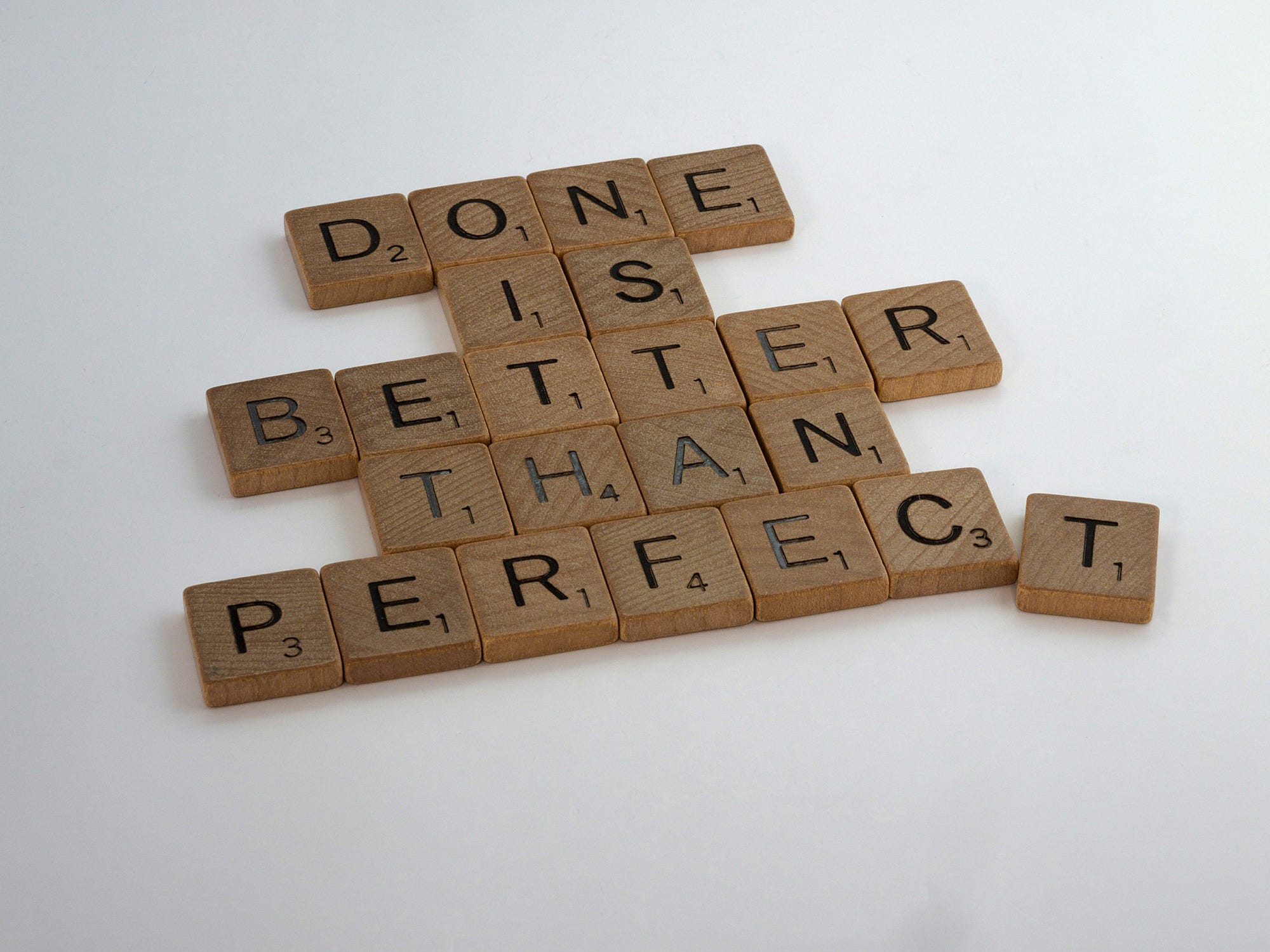
Pic: Brett Jordan
It’s a recurring theme, one I suspect my family have simply learned to live with. “Poor Dad. At what point do we have him forcibly removed for everyone’s safety?”
I was listening to the Halfway to Maybe episode called Fu%&ed up life advice, for the creative soul.
There is a comedy radio show in the UK called Just a Minute. It’s been around for ‘donkey’s years’, as my gran would say. Why years are measured by donkeys, I don’t know, and some stuff you like to just hold on to as a grandma saying, instead of looking it up on your favourite smart ass (can you see what I did there?) search engine, or AI know-it-all app.
Just a Minute is built around a beautifully simple idea: a panellist must speak for one minute on a given subject without hesitation, repetition or deviation.
The repetition rule is the one that seems to cause the most arguments because, technically, it sounds straightforward, but in practice, it becomes wonderfully petty and absurd.
The basic idea is this:
You should not repeat a significant word or phrase you’ve already used during your minute. If another panellist spots repetition, they buzz in and challenge you. If the chair agrees, the challenger takes over the subject for the remainder of the time, and they try to get to a minute of speaking before they, too, are buzzed out.
So if you said, “I walked into the room, and the room was empty,” someone might challenge the second use of “room”.
Over the years, the show evolved a sort of elastic logic, which it needed to. Tiny connecting words like “the”, “and”, “a”, and “of” are ignored. Plurals, tenses and similar word forms often spark debate. For example, “run” and “running” might be challenged, and “photograph” and “photographer” might trigger a loud buzz too.
Anyway, as I listened with a dangerous razor blade in my hand, all I could hear through my, I thought, carefully crafted piece was repetition. Some of it was for clear effect and reinforcement of theme or ideas, a trick often used in short, delivered stage scripts, but there were glaringly obvious moments, to me at any rate, which had me tutting and moaning ever more loudly as the piece developed.
Actually, my advice in the piece about being a creative didn’t specifically address perfection, but there was a strong nod to it.
I give you:
Make things before you feel ready.
You won’t feel ready.
And…
Share your work.
Even when it feels uncomfortable.
Especially then.
I did say in the piece, twice, with uncomfortable repetition, something about being a work in progress. But I am just that, forty years of it.
YouTube is a classic example of being a perfectionist for me, in that I have hours upon hours upon hours of footage featuring my adventures in India, Scotland, driving across the States, a voyage on the Queen Mary, interviews with fabulous, reasonably well-known photographers, and test pieces where I have walked with my camera along various canal paths seeking peace and solitude. I’m rather proud of much of it, as it goes. Have I published it yet?
Nope. Because ingrained in me is this idea of making something that, I don’t know, Ridley Scott Associates might look at and say, “This is art, we need this show as our next Netflix pitch.”
The reality is that, whilst I’m happy with the stuff generally, there’s a dangerous word, I’m expecting it to look like a twenty-strong crew filmed it, before delivering it to the best post-production house in London, for output good enough to woo ‘insert hugely important distribution network’ here.
For me, not only must it be technically sublime, but stuff has to have a purpose, and each film needs that before I release it. Just talking into the camera and popping up a thumbnail of me making some kind of inane, awkward face of surprise, shock, or horror, the kind that would have my children disown me now, doesn’t seem to cut it.
But why?
If you make stuff, just share it. Surely.
What did I say, and repetition alert now:
Share your work.
Even when it feels uncomfortable.
Especially then.
Perfection is a drain, isn’t it?
I wonder how many amazing projects or works have not been released into the world because perfection had turned up and built the kind of wall ‘you know who’ dreams about at night, or during the day at the Resolute Desk when he thinks nobody’s noticing.
Take the incredible photographic documentary work of Vivian Maier. It’s going to remain one of the biggest mysteries in photography why she didn’t show or share her work. Had it not been for that chap called John Maloof finding a box in a thrift auction house, who knows what might have happened? Might it have ended up in a dumpster, unceremoniously? Quite possibly.
“Anyone want to hold on to this box? Nobody bought it, and it’s taking up space, any thoughts?”
“Chuck it, Bob, we’ve got enough stuff in here already, it’s just collecting dust!”
Might one of the reasons, just floating this because we’ll never truly know, be that she’d seen some of her work and didn’t much like it? The taking and making of pictures had become a habit, and she rather liked the way it made her more observant, but really, the end result wasn’t quite what she was hoping for, so for the moment she’d just shove all the negs and a few pictures in a box, and show people, maybe, when she’d perfected her act, as it were.
There’s a chance, I guess?
Having a perfectionist streak, though, is also a reasonably good attribute. I think the secret is working in degrees of perfectionism. Wanting to do a job well isn’t a disadvantage if you learn, and I’m holding up a mirror to myself at this stage, too, some ways to deal with the P word.
One is recognising that perfection is being a trickster. It’s serving you up an unhealthy fear of judgment, fear of looking foolish, fear of somebody saying, “Really? You thought this was ready?”
The trouble is, waiting until something feels flawless can mean waiting forever because, in a sense, the finish line keeps moving. You arrive at one standard, think you’re done, and immediately invent another one. It’s building walls again, isn’t it?
Another is understanding that most people are not examining your work with anything like the forensic obsession you are. They are experiencing it, hopefully feeling it, and even responding to it emotionally, or not. The tiny flaw you replay in your head at three in the morning is most probably invisible to everyone else.
Personally, this is where I come unstuck because I think people are standing there with clipboards. But that’s often nonsense, because most people are simply trying to get through their extremely normal Monday morning.
There is also something healthy in allowing yourself to make things that are simply good enough for today. Not forever, not carved into stone tablets for future generations to analyse in hushed museum silence, though it’s a nice thought.
And perhaps most importantly, if every piece of work becomes evidence for or against your value as a person, then of course perfectionism becomes exhausting. You’re no longer making a photograph, writing an article, recording a podcast or baking a coffee cake, I love a coffee cake, you’re placing yourself on some kind of trial.
I forget sometimes, perhaps often, that creativity is also meant to involve play, experimentation and, stand by for the F word, I’m not bleeping it out this time…
FAILURE.
“Doris, the man said failure. Quick, hide under the covers!”
Failure is, and I need to remember this as much as anyone, the freedom to get things wrong publicly now and then.
I’d hazard a bet that everyone we admire did not arrive fully formed in terms of being on the pedestal we place them.
And perhaps that’s the thing to remember really. I don’t think people who genuinely care about what they make ever completely lose that perfectionist streak. But, the trick is learning when to stop listening to it for a while, put the thing out anyway, and just get on with life a bit.
I now need to go and hide behind the largest sofa I can find, as several friends of mine look at me in that, “You said it, now go and make it,” way.
On the subject of perfection, I give you:
"Good enough is good enough. We're not supposed to be perfect, we're supposed to be complete." - Jane Fonda
"Done is better than perfect." - Sheryl Sandberg