


In photography, the language of labels is used a lot. We put ourselves in labelled boxes, we’re portrait photographers, landscape shooters, street photographers and so on.
Labels labels labels. If we’re not categorising our genres, we’re categorising ourselves, hobbyist, semi-pro, pro, artist, personal… photography is full of labels that are all about identity.
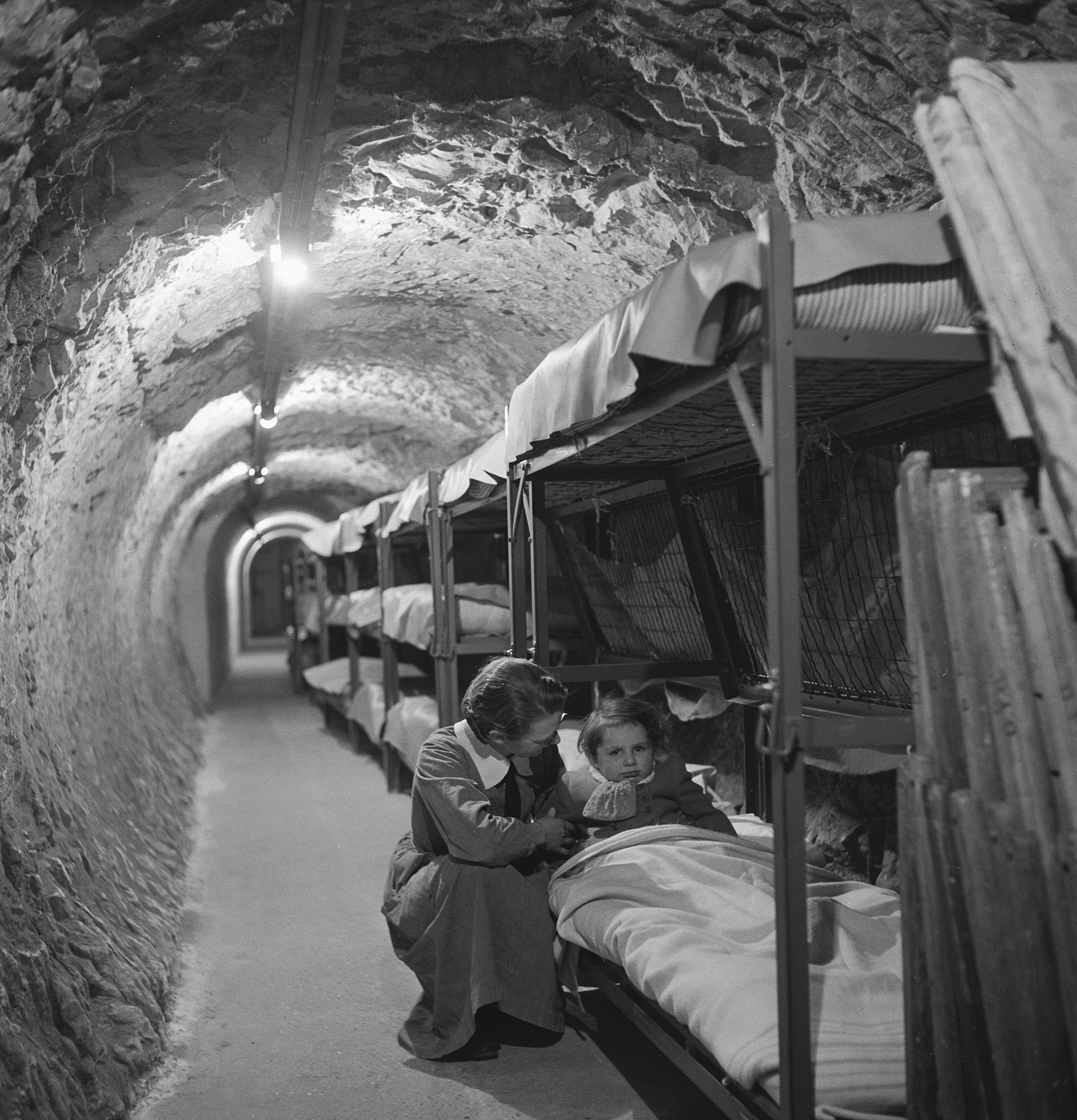
Pic: Library of Congress
They tell other people where we think we belong, or where we want to be placed, and I have a story about labels and identity that I learned yesterday afternoon.
My Dad lived what you might call a bit of a Harry Potter existence, without the wizardry and ‘he who must not be named’. You know it was years until I realised Hermione was, Hermione. He slept, my Dad this is, under the stairs, at 7 Rowntree Road in a space I’m pretty sure he wouldn’t have been able to stretch out in, and whilst that sounds like the workings of a rather cruel upbringing at the hands of Uncle Vernon, it was actually to keep him safe, from the Doodlebugs.
Now this might sound like an awkward kind of clumsy insect, flying one at that, that you find on hot summer nights bumping into the pergola such is its wayward habit, and then dropping into your lazy summer long-drink as the sun goes down. It was infact anything but a benign flying insect for those who lived through the reign of its terror from 1944.
The doodlebug was the name people in Britain gave to the V-1 flying bomb, a pilotless weapon, and an early cruise missile, really, sent across the Channel in the latter years of the Second World War. It began appearing in the summer of 1944, arriving not in waves like earlier bombing raids but one at a time, which somehow made it worse.
Now, I know this from the stories my father would tell, that you would hear the doodlebug before you saw it, this rough blurp blurp blurp blurp sounding engine, moving slowly enough to follow with your eyes. It wasn’t aimed with much care once it left the ramps in northern France. A basic system counted jet engine pulses and, when the blurp blurp blurp blurp count was reached, the engine stopped and the bomb fell wherever it happened to be. Most were meant for London, but plenty landed elsewhere.
When one hit, the blast could flatten houses across a wide radius, collapse nearby buildings, and shatter windows streets away. A direct hit in a built-up area could kill dozens in seconds; in open ground, it might leave simply a crater and little else.
What set the doodlebug apart wasn’t just the damage, though there was plenty of that, but the way it altered daily life. There were no long warnings, just that sound passing overhead and the waiting that followed once the engine cut out. As long as it was making sound you were okay, it was the silence that wrought fear.
People apparently, from what I gleaned last night when reading a little more about it, learned to pause mid-conversation, to stop walking, to hold their breath without really knowing they were doing it. Children grew up knowing the noise without fully understanding it, and babies were born while it was still part of the background.
Those children were later called doodlebug babies, not as a medical term or an official label, but as a way of marking time. It was a shorthand for saying, you were born into a world when the sky felt unreliable.
And so, that is why my Dad slept under the stairs in a tiny space shored up by railway sleepers that somehow my grandfather had found, although the very door that he used through which to enter and exit was just plywood of some kind, the type that was otherwise used in the kitchen, kitchen behind which sat the family’s crockery.
I’m not sure the door, that door, would have been adequate protection for the blast from an 850kg bomb. Neither would the oak table that his mum and dad, my nanny, and the grandad I never met, sleep under. But they didn’t like the public air-raid shelter in the park around the corner, or the one in the back garden that decades later I used to make dens in.
Nan said it was full of spiders and far too cold to sleep in, so an oak table it was in the front room, or parlour as it was known.
In that same room was a piano made by a Parisienne piano maker called Borg, like the famous tennis player, but not. The company name, Borg Pianos was inscribed inside the lid, I think in gold leaf, and Borg’s actual signature in pencil was inside the top lid to the left. The piano dated back to 1878 from memory.
It was from a time, I’m sorry to say, that ivory was used for the keys. It had ornate candlesticks on hinges for illuminating your sheet music in near dark, but as striking and well looked after as this upright piano was, parlour room damp had somehow affected the ability to ever tune it well, as well as age, it having been a passed down family heirloom, and the decorative struts at either end, had been replaced with something far plainer. They were removed to make table legs, although there only being two struts, I have no idea what the table used for the other two.
I always thought it would be worth a fortune, going by the date alone, but Paris at that time was producing pianos in greart numbers, and Borg was a small-scale piano maker or assembler, active in France in the second half of the 1800s, and rather than making his own original parts, often built his intruments using bought-in actions and components, which was very common at the time. Before the Internet came along, I’d not been able to find any of this out, and so my family heirloom with a dodgy but charming sounding middle C was destined simply to be something that would be passed down once more, to one of my kids.
I learned to play the piano on that instrument, did my grade 1 through 5 lessons and exams practise on it, proudly belted out The Entertainer on it, until in the early naughties, and stored in my parents-in-law’s garage, it was one day removed, sadly not to a home where once again it could be used to learn Moonlight Sonata on, but I fear as fodder for the large Biffa Dumpster in the sky, where old pianos strike their dodgy but charming sounding Middle C for the last time.
The reason I’m going on so much about the piano is that Nanny and Grandad pushed the oak table they slept under up to the wall on one side, and pulled the piano in to cocoon them opposite. A Borg piano and oak table their only protection as the Doodlebugs fell on their suburb of London.
Yesterday afternoon, I was at a wake, in the course of my other job in life, a celebrant, and I found myself talking to Uncle Mick, who reached out his hand to shake mine and introduced himself as Uncle Mick, a Doodlebug Baby.
Whilst I’d heard of Doodlebugs, to hear it used as a way to describe a period of childbirth was interesting. I’d heard of Blitz babies, conceived during The Blitz of 1940–41. VE Day babies, of course World Cup babies, as we move into more celebratory seasons of conception. Lockdown or pandemic babies, of course, will be a generation yet to announce themselves in the years to come, but rewinding back to 1944, a Doodlebug baby?
Sometimes, I suppose, a label like this is or was locked into family lore, because wartime births often come with strong remembered details, shelters, disruptions, rationing, streets changed overnight, local history, especially if the family stayed in an area that was hit.
But there’s no register, no official heading in the census, no spike marked in a ledger somewhere. The V-1 attacks ran for months rather than years, and births were spread across that window and beyond it, which makes them hard to count and easy to mythologise. The phrase itself never became an authorised term either. It didn’t come from doctors, demographers, or the government. It came from people. From families trying to explain a beginning, and I find that fascinating.
Eighty-two years. I’d been working out the maths as I talk to him.
“Gone in a blink,” he said, “Gone in a blink.”