


I would have thought that every family has its own language or lingoisms, as I call them. Not an entirely different language, you understand; nobody’s sitting around the dinner table speaking fluent Klingon, well, not that I’ve heard of late. What I mean are those wonderful family expressions, the words and phrases that make perfect sense to the people who use them and absolutely no sense to anyone else.
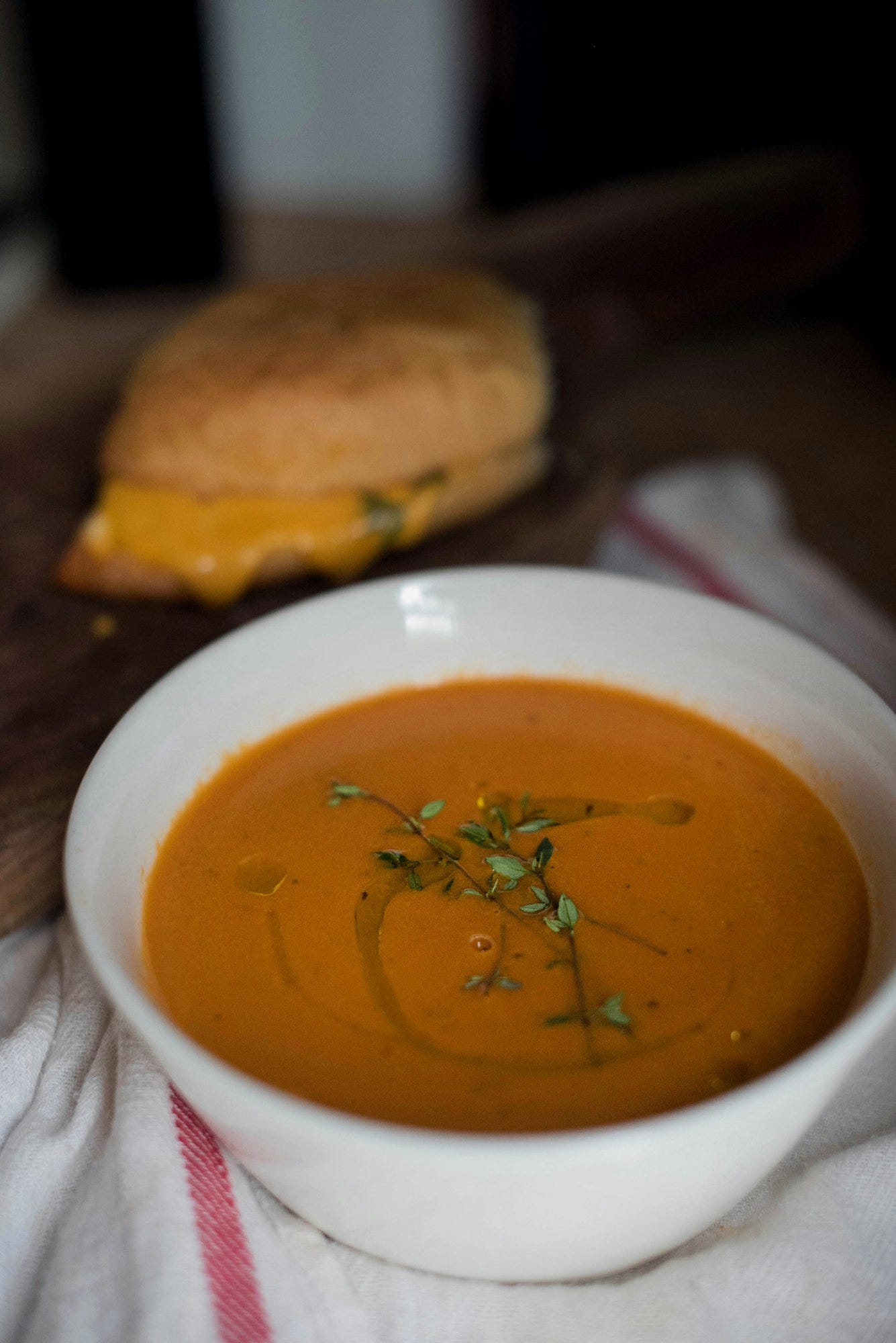
Pic: Jennifer Burke
They’re linguistic heirlooms, if you like, passed from one generation to the next. Sometimes they survive, sometimes they disappear when the last person who understood them is no longer around to explain what they meant.
In our house, we have a few.
Some have existed for a good while now, others have appeared from nowhere and settled in as though they’ve always belonged. They describe everything from making a cup of tea to offering a gentle warning when somebody’s getting a bit above themselves.
None of us ever really sat down and agreed on them; they arrived and just, well, stayed. I liken them to the chants of fans on football terraces. One day a rhyme arrives mid-match, and minutes later 15,000 people have latched on to the idea so loudly, that it becomes a new thing.
For example, how did this one start when noticing that there’s only a handful of opposition supporters:
“Is this a fire drill? Is this a fire drill, is this a fire drill, is this a fire drill…?”
Our lingoisms at home aren’t entirely unlike Cockney rhyming slang, a tradition that began in London’s East End during the nineteenth century. The basic idea is simple enough. You replace a word with a phrase that rhymes with it.
“Stairs” becomes “apples and pears.”
“Phone” becomes “dog and bone.”
“Wife” becomes “trouble and strife.”
You getting my drift, me old china?
China plate. Mate.
The clever bit comes afterwards. True Cockneys often drop the rhyming word altogether. So instead of saying they’re heading upstairs, somebody might say they’re going up the apples. The “and pears” is left hanging in the air, assumed knowledge among those who understand the code. To outsiders, it sounds utterly baffling. To those in the know, it’s perfectly clear.
I suppose our family does something quite similar: we don’t necessarily use rhyme, but we often drop the important bit, leaving only the clue behind.
Take this example.
In our family, one of our lingoisms is, “Put the John on, would you?”
What’s being asked for is a cup of tea.
The missing piece of the puzzle is the surname: John Kettley.
If you’re of a certain age, you’ll remember him presenting the weather on the BBC just after the nightly news. He was one of those familiar faces who appeared every evening at teatime. The weather forecast would arrive, followed by John Kettley pointing at a map of the UK covered in little sunshine symbols and rain clouds; very high tech. He was still of an age when letters could fall off the map, leading to the famous exchange in which one weatherman lost the letter F in the word fog on one bulletin, and, of course, being a Brit, he apologised immediately.
“Sorry about the F in fog,” he said, not realising what it sounded like to the millions watching and listening.
John Kettley became such a recognisable figure that somebody even recorded a novelty pop song about him.
“John Kettley is a weatherman,” went the song, followed by, “And so is Michael Fish.”
A sentence that probably means very little to anyone under forty, but which immediately transports many of us back to a particular moment in British life.
Somewhere along our family’s lingoism line, John Kettley became Kettley, Kettley being a lengthened play on the word kettle, and then the surname disappeared altogether. Which leaves us with John.
So if somebody walks through the front door after a long day and says, “Do us a favour and put the John on,” what they’re really asking for is a brew.
It’s absurd when you stop and think about it, but then all family languages are.
Another example came from a story told by John. Not John Kettley, but my friend John Anderton.
For years, he worked near a small café run by a woman whose customer service could best be described as functional. There was no warmth, no greeting, certainly no smile, and definitely no cheerful, “Next please.” Just a serving hatch and a permanent expression that suggested she’d rather be almost anywhere else, including the dentist, I suspect, on a day when actual pliers were being used.
“You’d order your lunch,” said John, “and hardly a word would be spoken with please and thank you off the menu. Then you’d wait.”
At some point, a plate and mug of tea would appear through the hatch and be deposited onto the counter from at least 3 inches above, with all the enthusiasm of somebody unloading bricks.
Names were never called, and orders were never announced. Customers were simply expected to know when their food and tea had arrived. Adding to the theatre was a loud doorbell she’d installed on the counter.
Every time an order was ready, she’d smash the plate and the full mug of tea down like a NASA command module returning to the Pacific on splashdown, then she’d press a round button.
Ding dong.
That was it.
No explanation, no communication. Just ding dong; your food, your cup of tea, is ready for collection, half the tea now slopped around the counter area for good measure.
The entire café would briefly stop what it was doing and glance towards the hatch, wondering if the summons applied to them. Meanwhile, the owner would continue muttering angrily about her good-for-nothing son, who apparently should have been helping but never seemed to be there. Over time, the bell became more memorable than the food and tea.
Ding dong meant a mug of tea to John and his family from that moment on. You simply came home from a long day, and someone might say; “You looked tired out, let me make you a ding dong.”
THAT, of course, makes no sense whatsoever until somebody explains the story, after which it makes PERFECT sense.
Which brings me to what may well become the latest addition to the lingoisms spoken within our four walls: Billy, taken from the name Billy Bragg.
Now, for those listening outside the UK, Billy Bragg is a British singer-songwriter who’s been part of our musical landscape since the 1980s. He has one of those names that is instantly recognisable here, but the phrase has absolutely nothing to do with Billy himself. He’s done nothing wrong and is entirely innocent in all this. He’s just lending a surname.
In many households, if somebody was spinning a proper yarn dressed up within a boast often, they’d be told to stop talking, shall we say, nonsense.
“Stop with your Billy Bull***t.”
But, just as with our other family expressions, we’d discard the obvious bit and keep only the clue, the Billy bit.
So if somebody starts polishing their own halo, inflating their achievements or generally becoming the hero of every story they tell, all that’s required is a gentle glance across the room and two simple words.
“Alright, Billy.”
Not Billy Bragg.
Just Billy.
Tuesday lunchtime, I’m in a café nursing a flat white and an aspirational-sounding soup, chatting with good friends, when a message pops up from a name in the business of wedding photography, I didn’t recognise, though at some stage in the great sport of Facebook friend collecting, I must have accepted a request.
It read:
“How’s it going, mate? Getting ready for a crazy summer of weddings? I’m going into a really busy summer.”
Billy had just, well, slightly evolved.
Until that moment, Billy in my head had always been shorthand for “Billy Bull***t”, our family expression for somebody stretching the truth or talking nonsense. But it struck me that Billy could work in exactly the same way as John, as in Kettle and Kettley.
This was a premier division, straight to the top, humble, not so humble brag. An “I’m so busy I need to tell a thousand strangers” statement. It wasn’t so much bull***t, it was just straight bragging.
Arriving unannounced for some reason irked me. The sender had and has no idea of my world and where I am, whether I’m up to my eyeballs busy, or waiting for the phone to ring, looking for an inbox to bring good tidings, or simply finding the where-with-all to keep positive when all around worldly stuff is conspiring to make the day-to-day, well, trickier.
I spend a reasonable amount of time talking about this on one of my podcasts, that worldly Internet noise that is the cause of much dis-ease. This seemed so opposite to what a real mate might know me for.
Don’t get me wrong here. There’s nothing remotely wrong with being busy. After all, many of us are indeed trying to keep the wheels turning, spinning plates and shouting for gaffer tape as we drop the next pile on the floor. We have mortgages, families, ambitions and an unhealthy relationship with our inboxes and social media likes.
It was the announcement that just irked me somewhat.
See, nobody had asked about the stuff of life.
The conversation hadn’t reached that point.
I’d never actually chatted in my life with this person, in that pub-like, “Hi I’m Bob,” way. He’d just marched into my virtual pub life, declared he’d won the lottery of busy-ness, stood on a box, offered the saloon bar a free round, and left me with the bill.
“You don’t mind, mate, do you? You’re my mate, right?”
Just when did being busy become something we felt obliged to advertise?
Somewhere along the line, “I’m really busy” stopped being information and became identity. It’s almost a badge of honour now.
The implication is that a full diary is evidence of a full life, and social media has only amplified it.
We’re forever seeing people “smashing it”, “crazy busy”, “back-to-back meetings”, “another airport”, “another 5am start”. There seems to be an unwritten competition to demonstrate that no one has ever worked harder than the person currently posting about it.
We have somehow created a culture where exhaustion sounds aspirational.
Perhaps it’s because being busy sounds successful, and perhaps because saying, “Things are a bit slow at the moment,” feels like admitting defeat.
The loudest declarations often resemble those of fishermen whose catch becomes larger every time the story is retold.
I sent a message back saying, “Glad for you, all the best,” which is unlike me. It was a tad terse, and proof that sometimes you need to go back to your lunch and enjoy a little more aspirational-sounding soup before replying.
What I really wanted to say was that life isn’t a competition measured by calendar entries or by how many times we tell other people how full those entries are, though I was fearful of sounding like a jockey. You can add the appropriate family lingoism.
I admire those who’ve got this life thing right and ask questions before providing answers, those interested in someone else’s world before advertising their own.
He didn’t need a lecture, though, and who am I to even begin to assume that lofty position?
Before this starts sounding like a thought for the day, I’d certainly add in that none of us really knows what somebody else is carrying, and it’s a note to self, sentence too.
I think of this particularly when I’m walking Sir Barkalot in the morning. My bright, cheery “Good morning” to passersby on the path isn’t always greeted with an AA Milne Piglet-style breezy return of that same energy; sometimes it’s more like an Eeyore rebuttal: “Is it?”
And sometimes nothing at all.
I used to get a little irritated by that, but really it’s only their version of the unannounced bloke saying, “I’m really busy, you know.”
Of course, I don’t know what’s happening in that person’s life for that one moment we meet, albeit briefly, and I’ve stopped assuming they’re rude because they don’t match my overbearing enthusiasm.
Right, I have a metaphorical bowl of aspirational-sounding soup to finish and a Frank Sinatra-sized serving of regret that I didn’t show a little more empathy in reply to that message, because, well, maybe they were on the path too, and just needed a little reassurance at that moment, from a message not so subtly disguised as a Billy.
I missed my chance, didn’t I? It’s going to be another one of those “If only I’d saids”.
Perhaps, “That’s good to hear, mine’s looking a little different this year, but how are things otherwise?” might have been more appropriate.
Or, “Glad to hear it. I hope it goes well for you. What else is happening in your world?”